|
Acorn barnacle
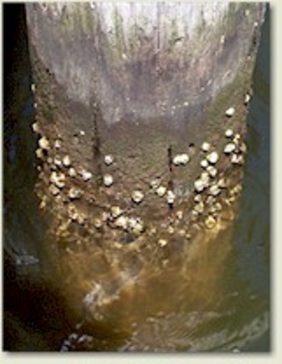
species live in intertidal regions and are
exposed to the air for a significant part of
each day.
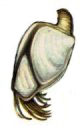
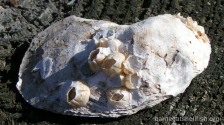 Their body is a
shell of six overlapping plates of calcium
carbonate with a gap at the top covered by valve
that open when the animal is submerged, and
close when it is exposed to the air. Their body is a
shell of six overlapping plates of calcium
carbonate with a gap at the top covered by valve
that open when the animal is submerged, and
close when it is exposed to the air.
<click on image
to enlarge>
The base of this
igloo-like structure attaches to a firm surface
such as a pier, rock, or the hull of a boat.
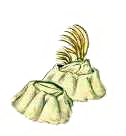
When the tide is low, the barnacle closes its
valves to retain moisture and does not emerge
from its "igloo" until it is again submerged, at
which time six pairs of feathery, chitinous legs
called cirri emerge and sweep planktonic
material (its source of nourishment) into its
cavity.
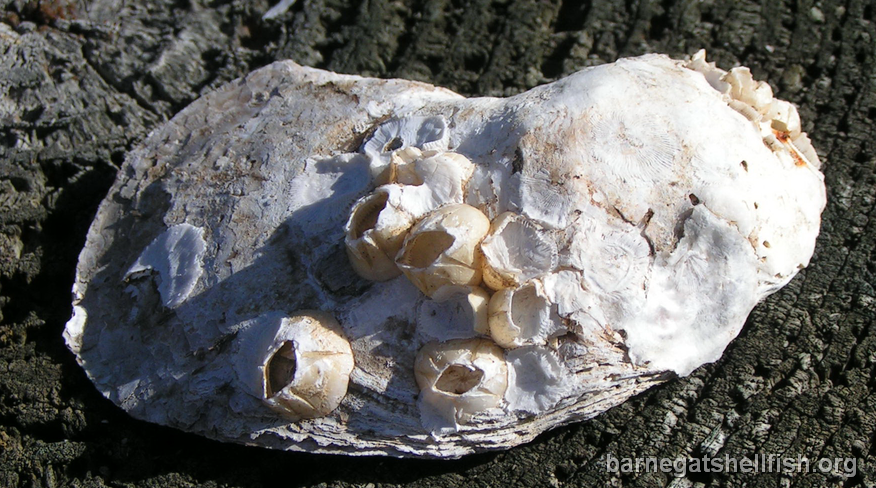
Barnacles are
formed by six overlapping plates of shell with a
flat base and an opening at the top. The top
opening has two valves that open and close for
the barnacle to feed.
Barnacles vary in
color from gray to white and in size from less
than half an inch to 1 inch in diameter.
|